Reports and Data
PostQ writes focused artifacts instead of one opaque report. Together they preserve source-engine evidence, normalized scanner facts, review-oriented views, and interoperability formats.
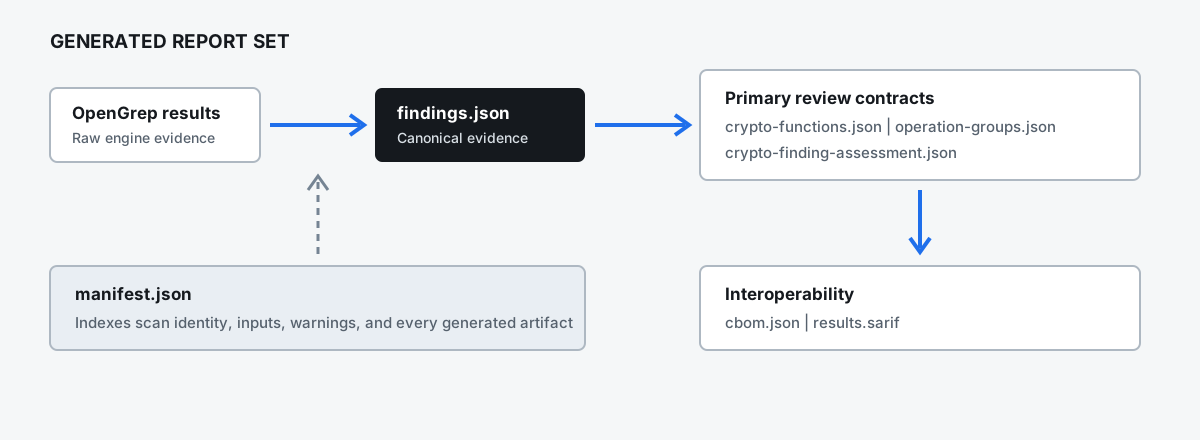
Start with the audience, not the filename
| Audience | Start with | Main question |
|---|---|---|
| Security lead | crypto-finding-assessment.json |
What is the repository posture and review workload? |
| Developer | operation-groups.json |
Which calls form a logical crypto operation and what should change? |
| Detailed reviewer | crypto-functions.json |
What exact call and parameter evidence was found? |
| Scanner investigator | findings.json and raw OpenGrep results |
How was the normalized finding produced? |
| Inventory system | cbom.json |
Which crypto assets can be exchanged as a bill of materials? |
| Code-scanning platform | results.sarif |
Which source-linked results can be imported? |
| Automation owner | manifest.json |
Which scan and artifacts does this folder represent? |
Common contract fields
Scanner JSON reports include schemaVersion, generatedAt, and scanSession. Use these fields to
confirm that files belong to a compatible report contract and scan session before combining them.
License content, customer identity, repository fingerprints, and ledger data are not written into scanner reports.
Continue with the Report Artifact Reference and Interpret Results.